
Advanced HPC Simulations and Optimization: Arctur in Low-Emission Appliance Development
Arctur applied its expertise in simulation and optimization to support the development of low-emission household appliances. The team developed an optimization algorithm to determine the best configurations for refrigeration system components, including pipe lengths, diameters, thermal conductivity, and compressor rotation frequency. This approach helped improve energy efficiency and reliability while reducing the need for physical prototypes in the early stages of development.
High-performance computing (HPC) resources made it possible to quickly test different operating scenarios and analyse complex models.
As part of this work, Arctur supported the development of a digital twin of the refrigeration system, which served as a virtual laboratory and allowed simulation of the entire refrigerator, including the evaporator, condenser, compressor, and capillary tube. The digital twin helped the team see how different parameter settings affect system behaviour and provided a practical basis for optimization without requiring multiple physical prototypes.
Tomislav Šubić, Head of AI at Arctur: “The digital twin allowed us to see how the individual components of the refrigerator interact, without relying on physical prototypes. This let us quickly test different configurations, develop our optimization algorithms, and gain a clearer understanding of how each parameter affects energy consumption. It gives us a solid foundation for further improvements and supports the development of more efficient appliances.”
Using HPC resources, Arctur could handle demanding models and evaluate multiple scenarios efficiently. This made it easier to understand how individual components and settings influence performance and helped the team formulate solid recommendations for component behaviour and control strategies.
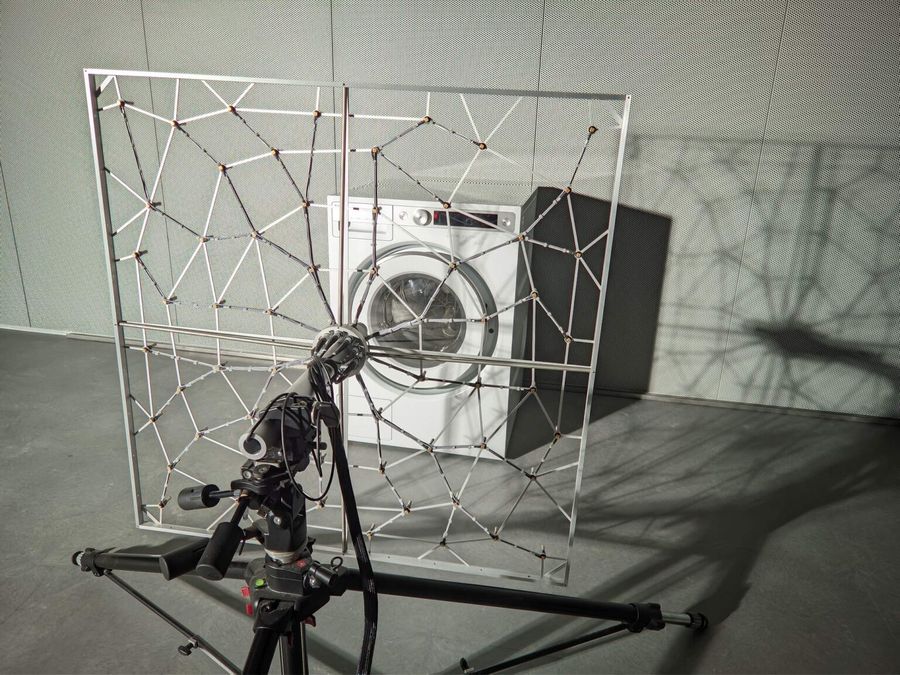
These activities were carried out within the R-NEA-SV project – Development of Low-Emission Household Appliances and Verification Systems - in collaboration with Gorenje and Dewesoft. The project focused on developing a low-emission washing machine (NEPS) and a low-emission refrigerator (NEH), and on establishing an NVH centre (Noise, Vibration, and Harshness) for precise measurement of noise, vibrations, and subjective perception of sound.
Dejan Dren, Gorenje, d.o.o., Predevelopment, Team leader:
»Our collaboration with Arctur brought substantial added value to the development of our low-emission refrigerator, as the digital twin served as a virtual laboratory that allowed us to test ideas, optimize system performance, and significantly reduce the number of prototypes. This approach played a key role in achieving — and ultimately surpassing — our targets for energy efficiency and noise levels, resulting in an appliance that reaches energy class A and an exceptionally low declared noise level of 29 dB.«
The project ran from 1 January 2023 to 31 December 2025, with a total value of EUR 2,409,386.18. Its broader goal was to improve energy efficiency and reduce emissions while enabling testing and validation in a simulated environment, thus reducing the need for early-stage physical prototypes.
More information about the R-NEA-SV project and Arctur’s role is available at https://www.arctur.si/en/rd-projects/r-nea-sv/ .
Other news
AgriNext IT Platform – A Digital Learning Environment
Arctur has launched the AgriNext IT Platform, a digital learning environment for multifunctional agriculture, connecting stakeholders across Europe through training, knowledge resources, and collaboration...
19. 12. 2025 / Industry, eHealth, Tourism, Heritage, GOV & NGOsArctur Team wishes you an inspiring 2026
May the new year bring you many sunny days, joy, inspiration, and quality time spent with your loved ones. Happy holidays!
24. 11. 2025 / Industry, eHealth, Tourism, Heritage, GOV & NGOsArctur R&D: Driving Scientific Excellence and Applied Innovation
Creating Impact Through Research: R&D Group is shaping the future of technology through international, multidisciplinary research. With contributions spanning artificial intelligence, high-performance...