
Montenegro Advances Digital Heritage and Tourism Innovation with Arctur’s Support
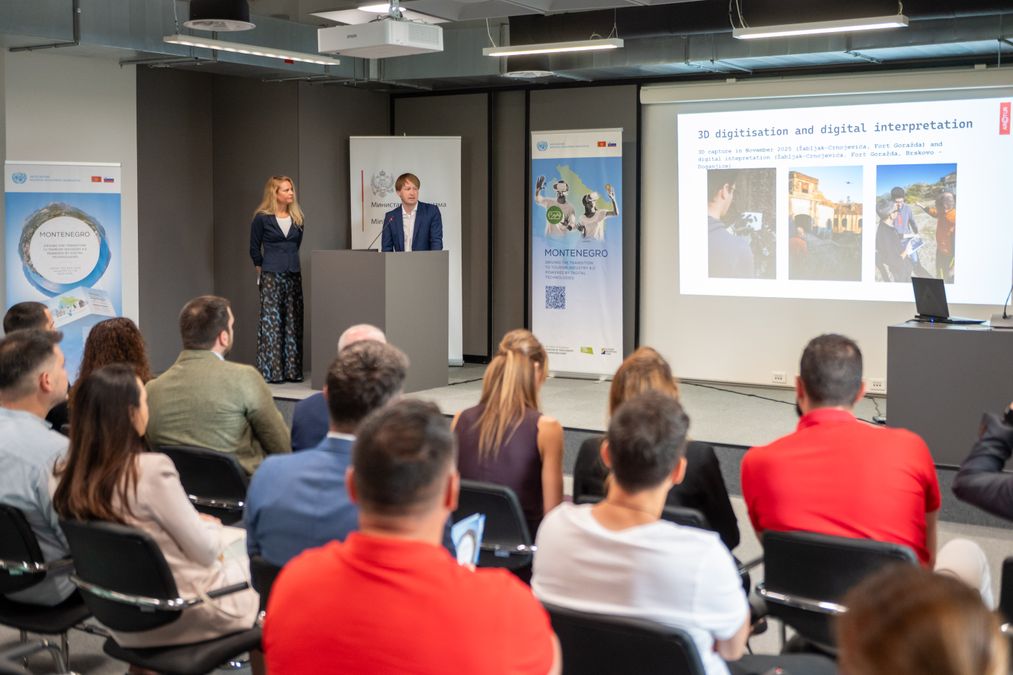
Montenegro is advancing the digital transformation of cultural tourism through the project Provision of Digital Technologies Fostering Tourism 4.0 and Technological Learning in Montenegro . Developed at the request of the Ministry of Economic Development and Tourism of Montenegro, supported by UNIDO, and funded by the Slovene Enterprise Fund (SEF) and the Ministry of the Economy, Tourism and Sport of the Republic of Slovenia, the initiative builds on Tourism 4.0 practices developed in Slovenia and adapts them to the Montenegrin context.
Implemented by Arctur in cooperation with the Ministry of Tourism of Montenegro and the University of Donja Gorica, the project combines advanced digital technologies, 3D digitisation and visualisation, high-performance computing, capacity building, and international collaboration to strengthen local capabilities, preserve cultural heritage, and foster sustainable tourism development.
Drawing on Arctur’s experience in transferring advanced technologies and digital methodologies across sectors – from industry and high-performance computing to tourism and cultural heritage – the project demonstrates how technological expertise can be translated into practical tools for heritage preservation, interpretation, and visitor engagement.
“Knowledge transfer was at the heart of this project. By combining practical training with advanced digital technologies, we strengthened local capacities and equipped participants with the skills needed to preserve and interpret Montenegro’s rich cultural heritage digitally,” concluded Urška Starc Peceny and Matevž Straus, who led the Arctur team involved in the project.
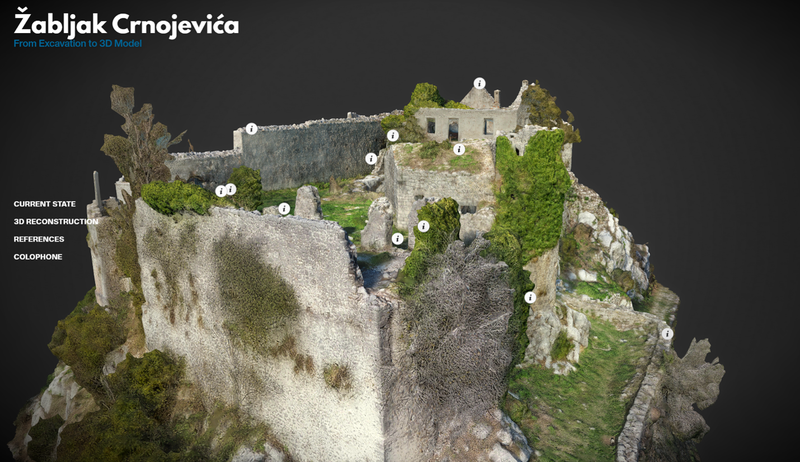
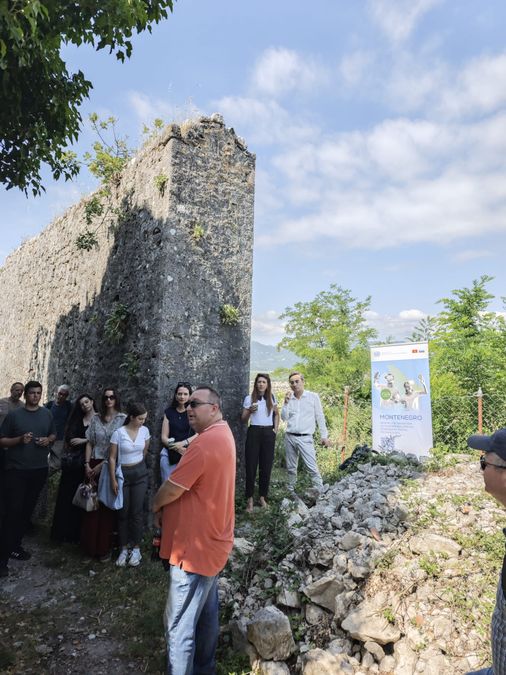
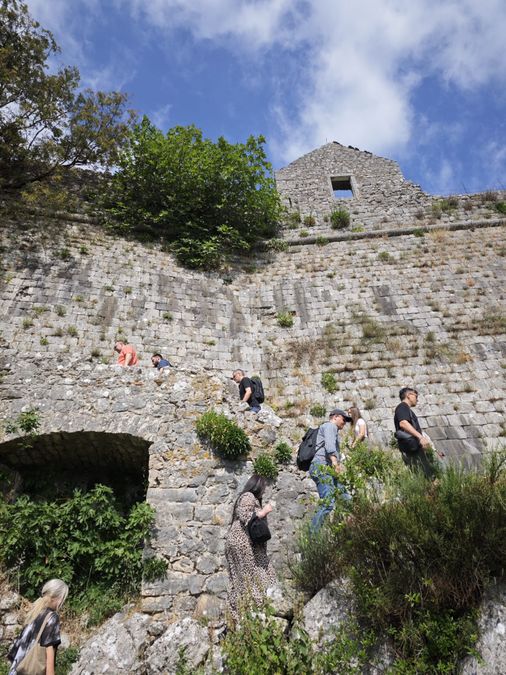
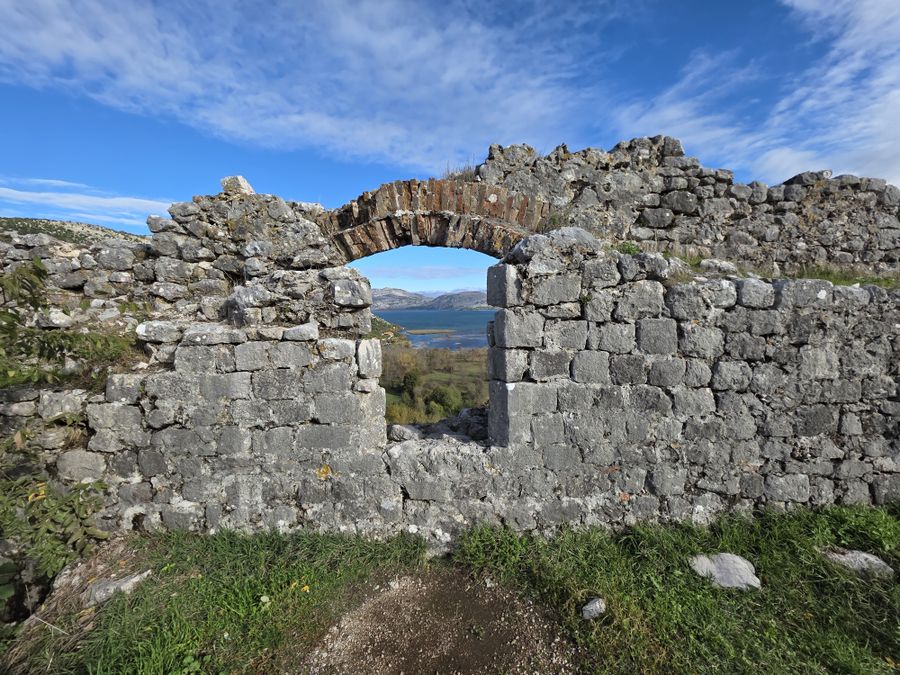
One of the project’s key achievements was the digital capture and 3D documentation of the pilot heritage sites Fort Goražda and Žabljak Crnojevića. The resulting datasets enabled the creation of high-quality point clouds, textured meshes, and digital heritage models that support virtual experiences, digital interpretation, and future reuse.
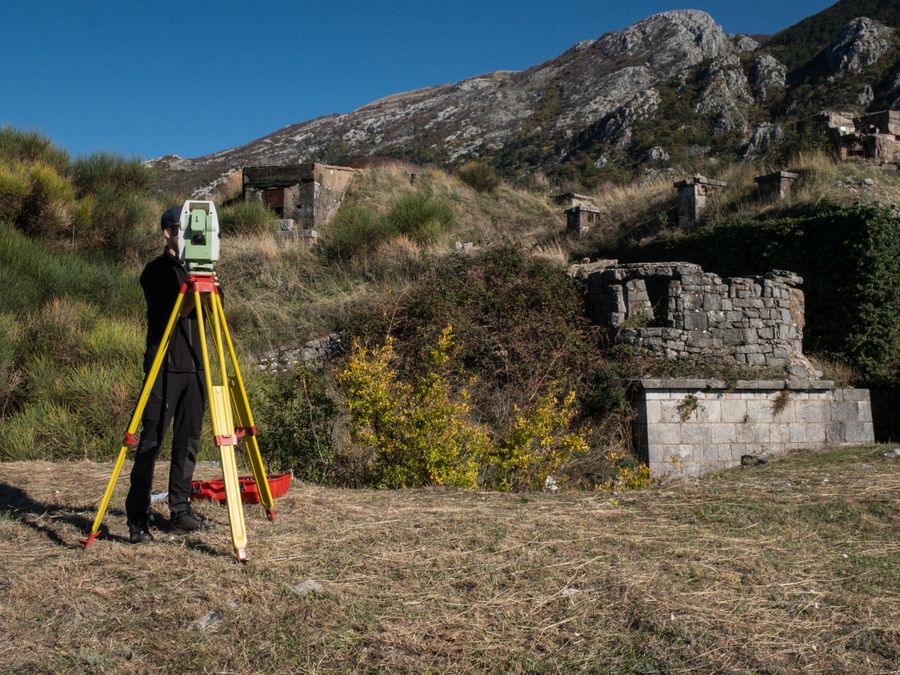
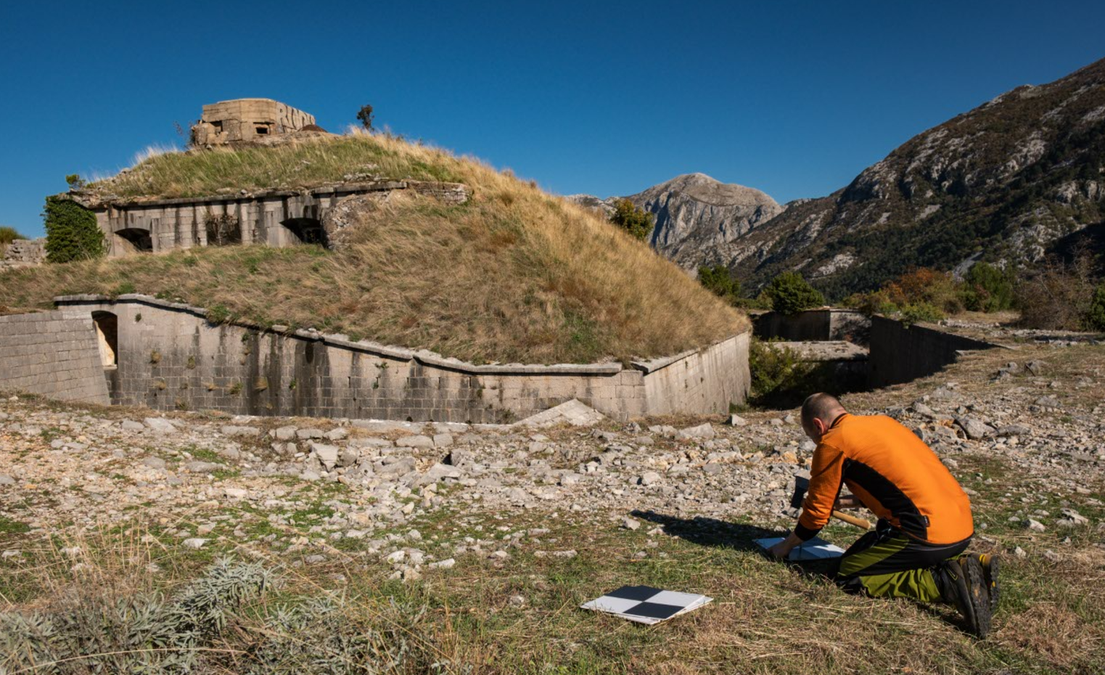
Knowledge transfer was closely connected to practical implementation. Participants were introduced to the complete digital heritage workflow – from planning and field capture to photography, data processing, 3D model generation, optimisation, and the development of final digital experiences.
From Advanced Computing to Digital Heritage Experiences
Creating high-quality digital heritage experiences requires more than producing visually attractive 3D models. It involves managing the entire technological process: capturing heritage sites, processing large volumes of image and spatial data, generating and optimising complex 3D models, and integrating them into accessible digital experiences.
Arctur’s role builds on years of experience in advanced 3D technologies, high-performance computing, and digital solutions across different sectors. Within the project, this expertise was applied throughout the entire workflow – from field capture and processing of large datasets to 3D model generation and optimisation, integration into interactive experiences, and presentation through Arctur’s own 3D viewer.
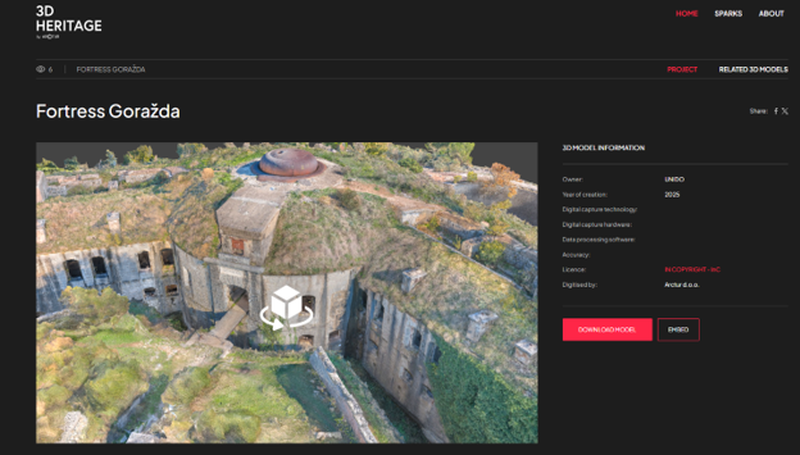
This combination of advanced computing infrastructure, specialised 3D expertise, proprietary technology, and experience in developing user-oriented digital solutions enabled the creation of reusable digital heritage assets that can support preservation, research, education, storytelling, and new tourism experiences.
Showcasing Montenegro's Digital Heritage
Supported by Arctur, the project also marked Montenegro's first participation in the European TwinIt! campaign. As part of the initiative, high-quality 3D models of Fort Goražda and Žabljak Crnojevića Fortress were published through Europeana's common European data space for cultural heritage, increasing the visibility and accessibility of Montenegro's heritage across Europe.
Building on these datasets, the project delivered several digital interpretation solutions, including a virtual 3D tour of Fort Goražda, an immersive reconstruction of Žabljak Crnojevića developed in collaboration with architectural historian Dr. Dejan Gazivoda, and a digital reconstruction of the medieval mining settlement Brskovo – Village of Doganjice.
Shaping the Future of Tourism
"This project demonstrates how digital technologies can unlock the value of Montenegro's cultural heritage while creating new opportunities for sustainable tourism development. By bringing together knowledge, innovation, and collaboration, we are laying a strong foundation for the future of our tourism sector," said Simonida Kordić, Minister of Tourism of Montenegro.
Innovation was further encouraged through the Call for Innovative Concepts: Digital Interpretation of Cultural Heritage, which attracted 14 submissions from multidisciplinary teams and individuals. Three selected concepts showcased new approaches to storytelling, education, and visitor engagement through digital technologies.
The project demonstrates the value of connecting advanced technology with local knowledge and cultural heritage expertise. By combining Tourism 4.0 methodologies, advanced 3D technologies, high-performance computing, digital storytelling, heritage digitisation, and European data spaces, it shows how technologies and expertise developed across different sectors can be successfully transferred to cultural heritage and tourism.
Building on these achievements, Arctur continues to bridge advanced technology and real-world applications, helping destinations and cultural institutions transform complex digital technologies into practical tools for heritage preservation, interpretation, collaboration, and sustainable tourism development.
Other news
ARIS Data Portal: Empowering Research Through Interactive Data Visualisation
Complex data only creates value when people can understand and use it. With intelligent data visualisation, automated analytics and an intuitive user experience, Arctur's latest solution makes research...
8. 6. 2026 / Industry, GOV & NGOsNew 4PM Module Streamlines Cost Planning for ARIS Co-Funded R&D Projects
A new cost planning module in the 4PM platform simplifies financial management for ARIS-funded R&D projects, improving transparency, accuracy, and efficiency.
19. 3. 2026 / GOV & NGOsAgriNext IT Platform – A Digital Learning Environment
Arctur has launched the AgriNext IT Platform, a digital learning environment for multifunctional agriculture, connecting stakeholders across Europe through training, knowledge resources, and collaboration...